



The DigiTwin4TEACH-Project
Here you can find all important informations about the Erasmus-Project
The DigiTwin4Teach Project is an Erasmus+ project founded by the European Union. The project starts in 11/2024 and has a duration of 2 years.
The project partners are the vocational schools Carl-Benz-Schule Gaggenau (Germany) and Mercantec (Denmark). The goal of the project to create an open access platform, course and learning material about creating digital twins.
goals of the DigiTwin4Teach Project
Europe is undergoing multiple transformation processes in an international context. On the production side, more individualized, smart production in a digital working environment is required in order to remain competitive in the future.
Industry 4.0 technologies paired with artificial intelligence are enabling faster developments. This results in more flexible manufacturing processes and production sequences. Digital twins can be used to simulate and test these complex and flexible production processes. Digital twins help to learn systems and equipment and to simulate and test a wide range of production scenarios.

This requires trainees and participants in vocational training to have important skills in the field of digitalization as well as the ability to independently develop learning content for their future tasks in the operational environment. In order for learners to acquire these skills, it is necessary for training staff to be up to date with the latest technology and to be able to create and work with digital twins themselves.
In an educational landscape that is increasingly characterized by digital progress, the future also lies in the further development of digital tools in schools in order to keep pace with the rapid pace of development. One of these pillars is digital twin technology, which allows a simulative view of real situations and can provide information about problems in later production at an early stage.
With the help of CAD models, which are assigned physical and movable properties, machines and complete production systems can be tested for full functionality before they are produced. In addition, the physical properties of objects and experiments can be simulated and researched.
In addition, learners in vocational schools can use a digital twin to continuously train their skills in areas such as automation technology, as no large hardware purchases are required. The digital twin can therefore also be used regardless of location, as it can be implemented at home on the PC or in the classroom or laboratory.
The motivation for the project idea is the fundamental technical progress in this area of technology. After more than two years of intensive research and teaching in this area at our vocational schools, we see a great advantage in the technology of the digital twin. It is absolutely state of the art and for this reason should not be missing from any vocational training or course of study.
However, based on our previous experience in this area, we must also conclude that the technology itself is complex and can be very challenging for many teachers without some external support.
We would therefore like to use the knowledge we have already gained to pave the way for as many teachers as possible and open up access to this pioneering technology. Thanks to the experience and expertise already gained in our educational institutions, to set up a comprehensive series of training courses for teachers and those responsible for training, which provides a broad foundation for the topic of digital twins and gradually teaches them in an appropriately didactic way.
The project partners

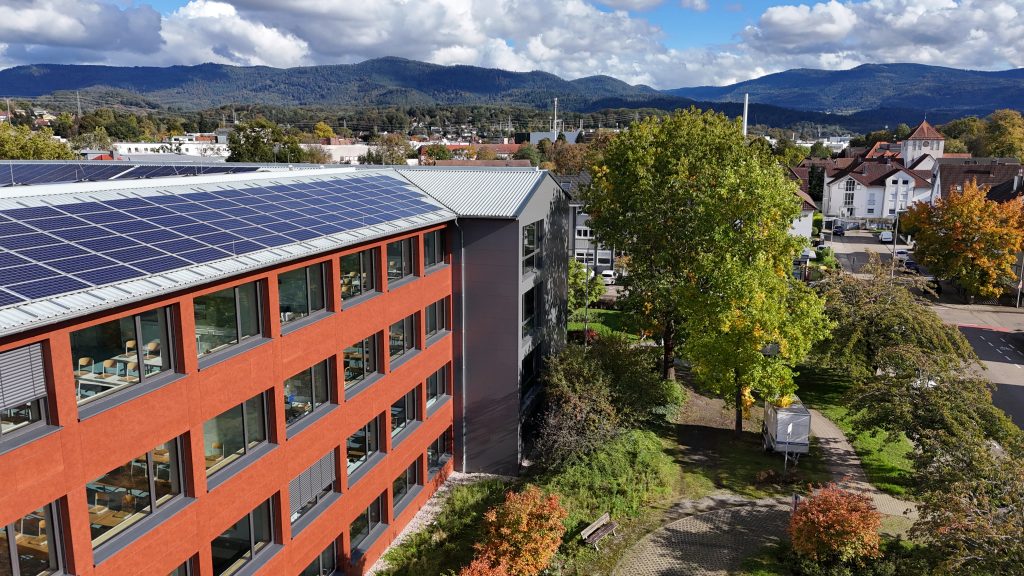
The CBS is an industrial-technical vocational school in the southwest of Germany. The vocational focus is on metal technology, automotive technology and mechatronics. Currently, about 1000 students study at the school. About 60 teachers accompany the learners here in vocational preparation courses, in the vocational school, in the vocational college as well as in the technical college.
The school is equipped with modern laboratories such as the Learning Factory 4.0 or the high-voltage laboratory. The aim of the school is to develop competencies in preparation for the present and future world of life and work. Of particular importance to the CBS is the project-based action orientation combined with openness to innovation and new technologies – and this as a partner in cooperative collaboration with local companies as well as with other partners and institutions internationally.
Thus, the school has been conducting Erasmus and other non-European activities abroad for almost 20 years and is constantly striving to expand and deepen these. With the VLEFACTORY project and the European joint development of learning materials, the opportunity arose to achieve such an expansion.

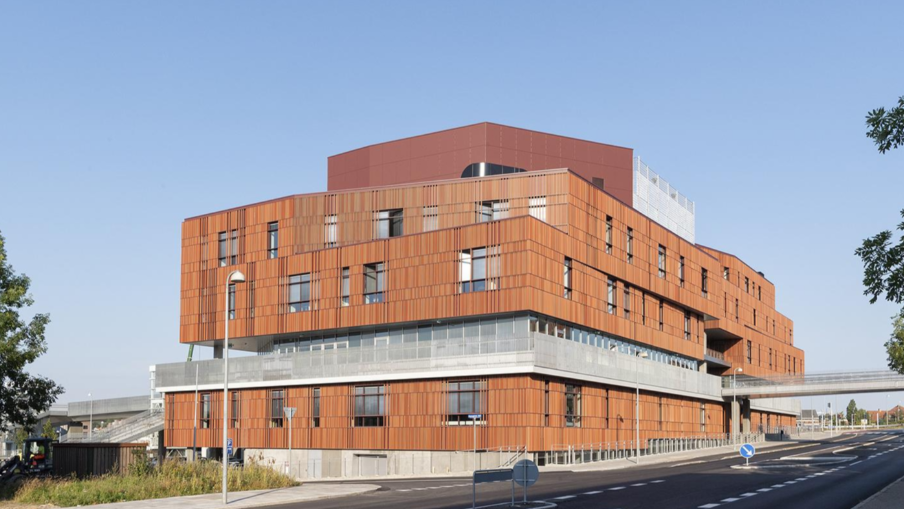
Mercantec is a technical school located in Viborg, Denmark. The school offers programs aimed at preparing students for a variety of professions, including mechanics, electricians, IT technicians, trade education, and many other technical and craftsmanship areas.
The school has modern facilities designed to provide students with hands-on skills and knowledge in their chosen fields. This may include laboratories, workshops, and IT equipment.
Mercantec offers various levels of education, including vocational education, business academy programs, and continuing education. There are also options for taking individual courses and professional development.
The school often has close ties to local and national businesses, providing opportunities for internships and collaborative projects. This allows students to gain practical experience and build industry networks. Students who complete their education at Mercantec have good opportunities to find employment in their chosen field, as the school aims to equip them with relevant skills and knowledge.
Mercantec places importance on innovation and entrepreneurship, encouraging students to develop their creativity and problem-solving skills.